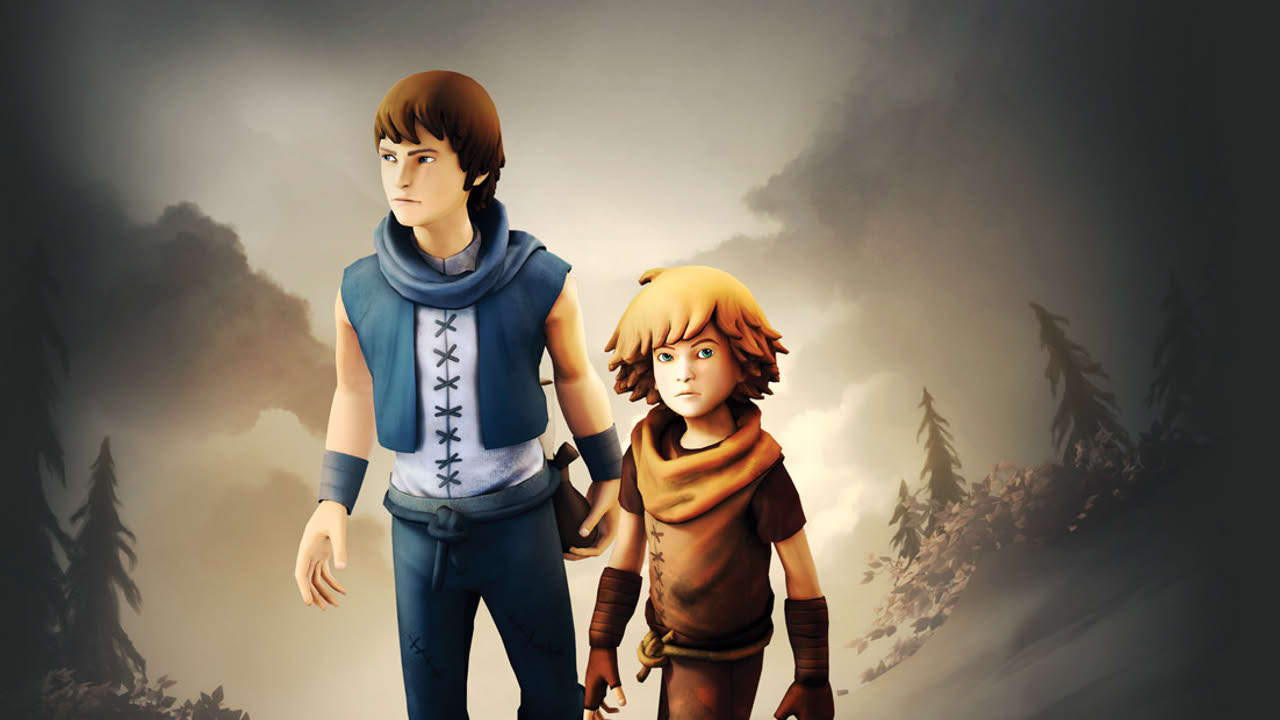
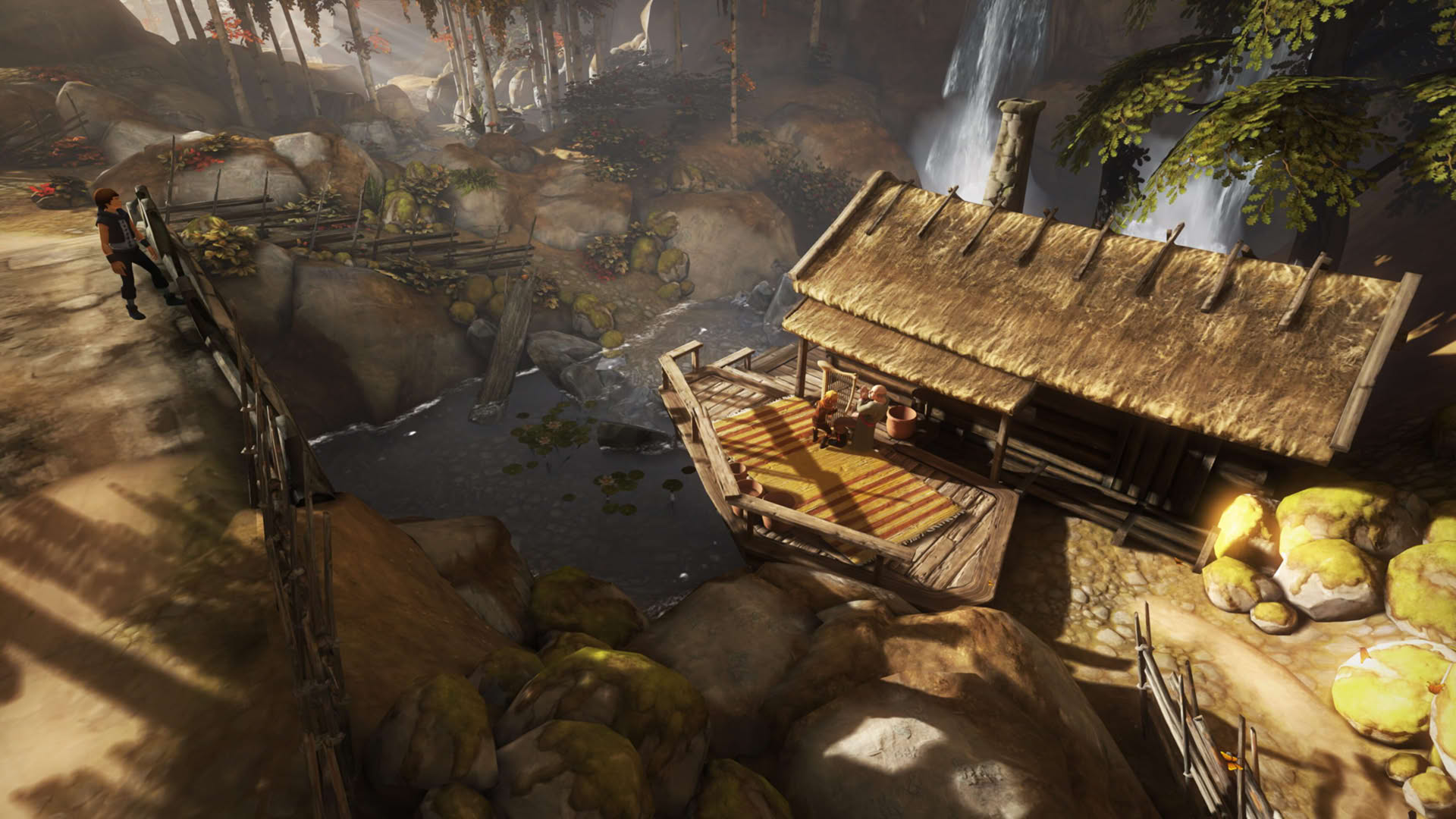
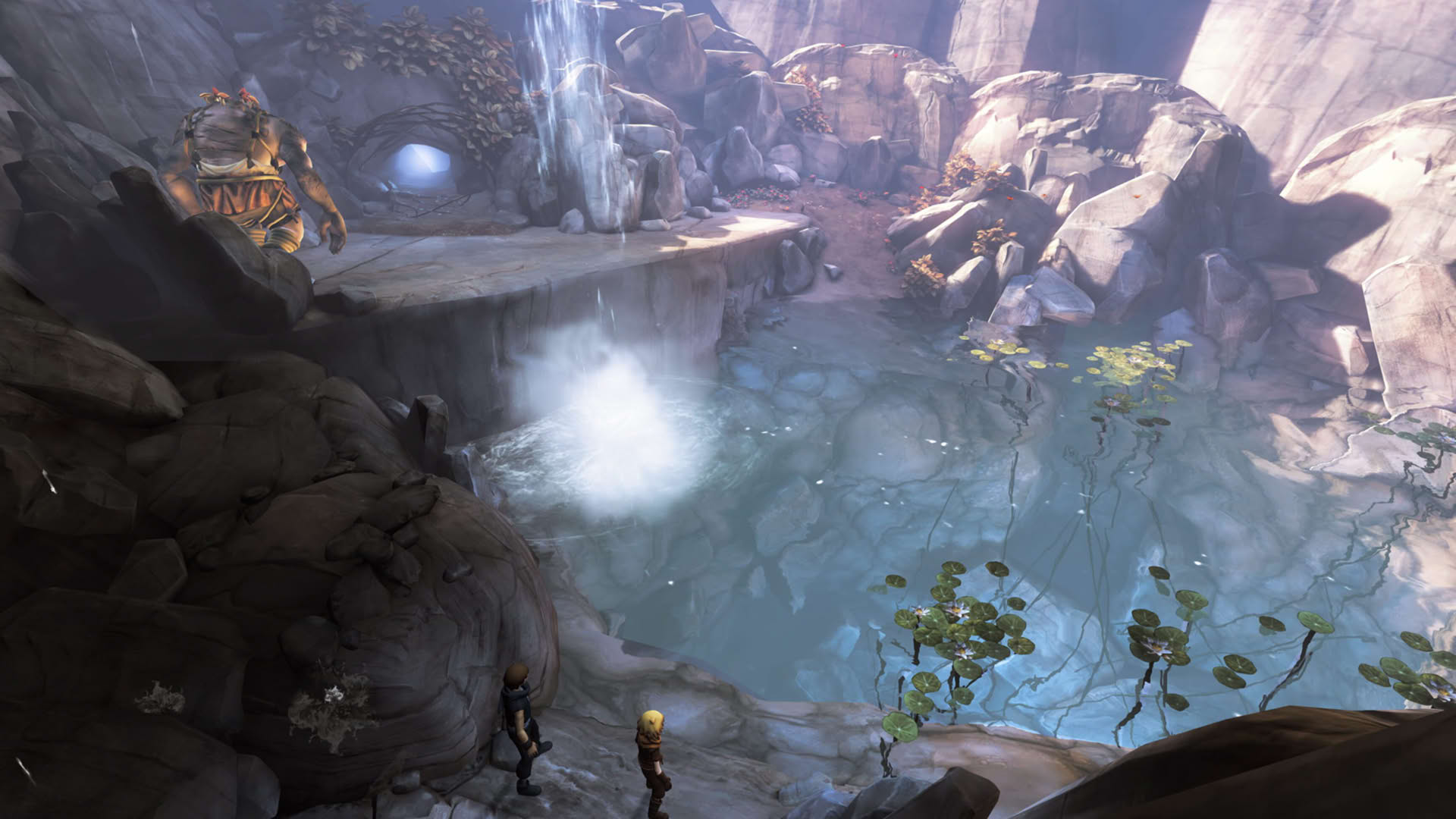
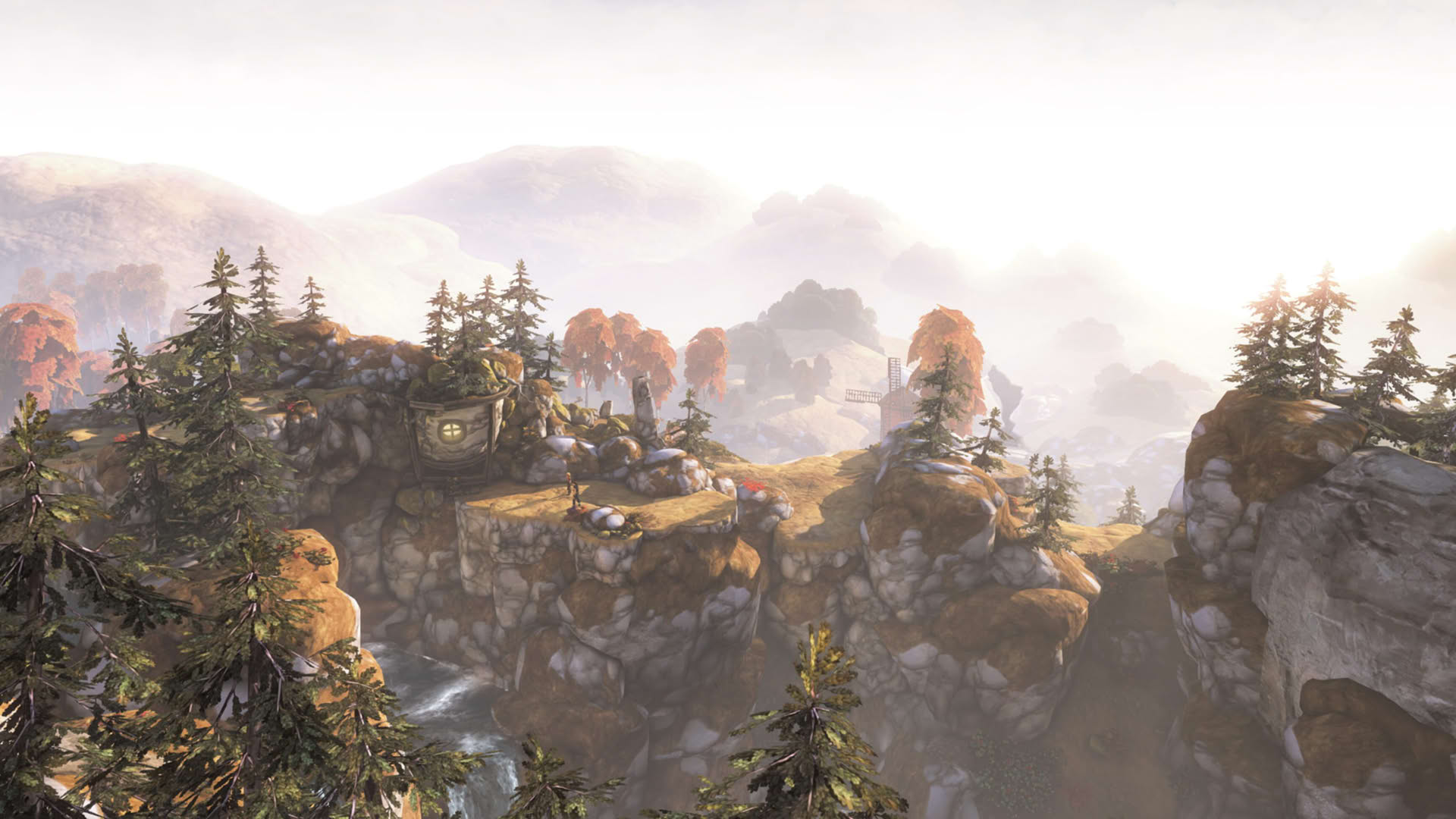
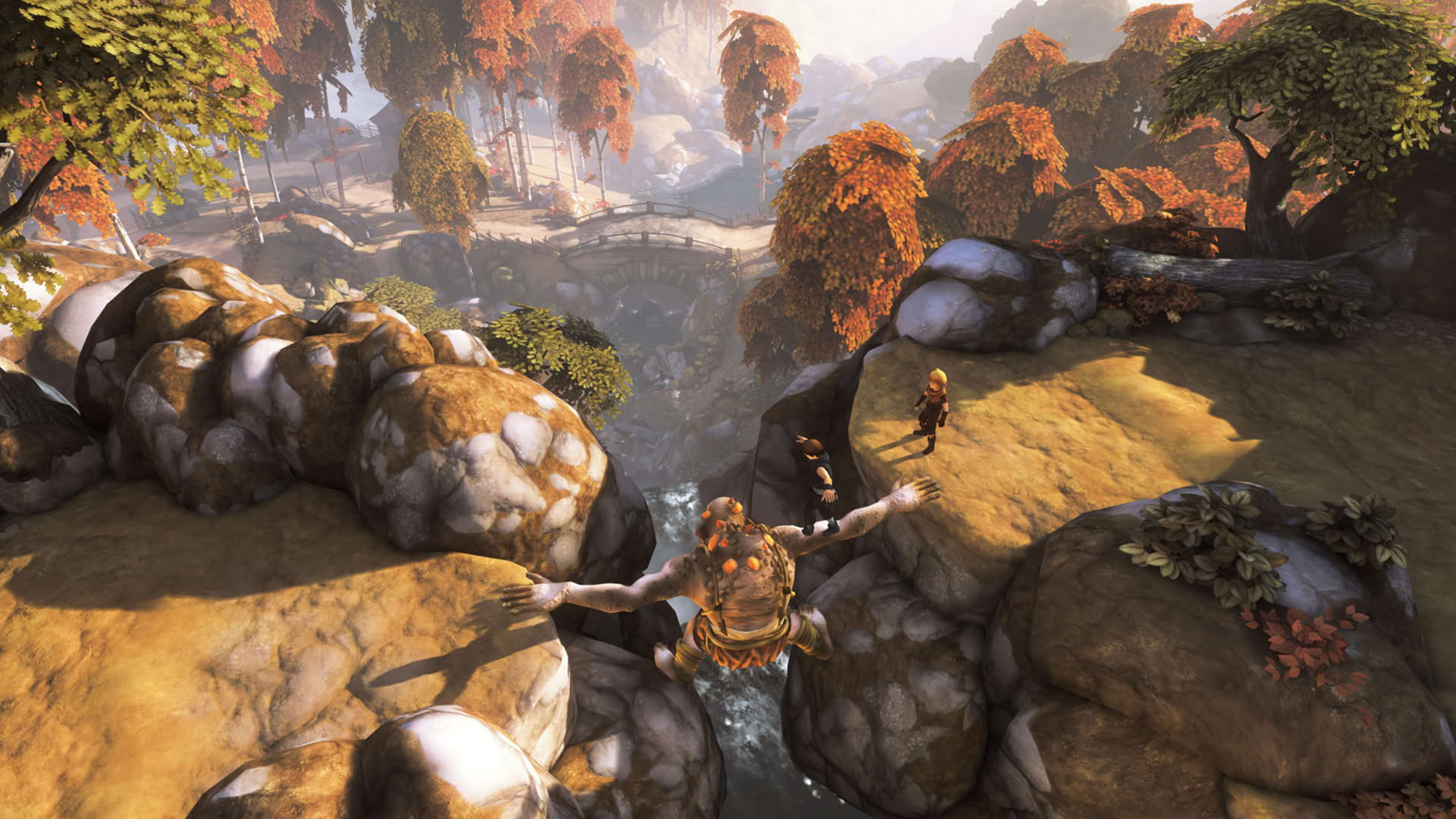
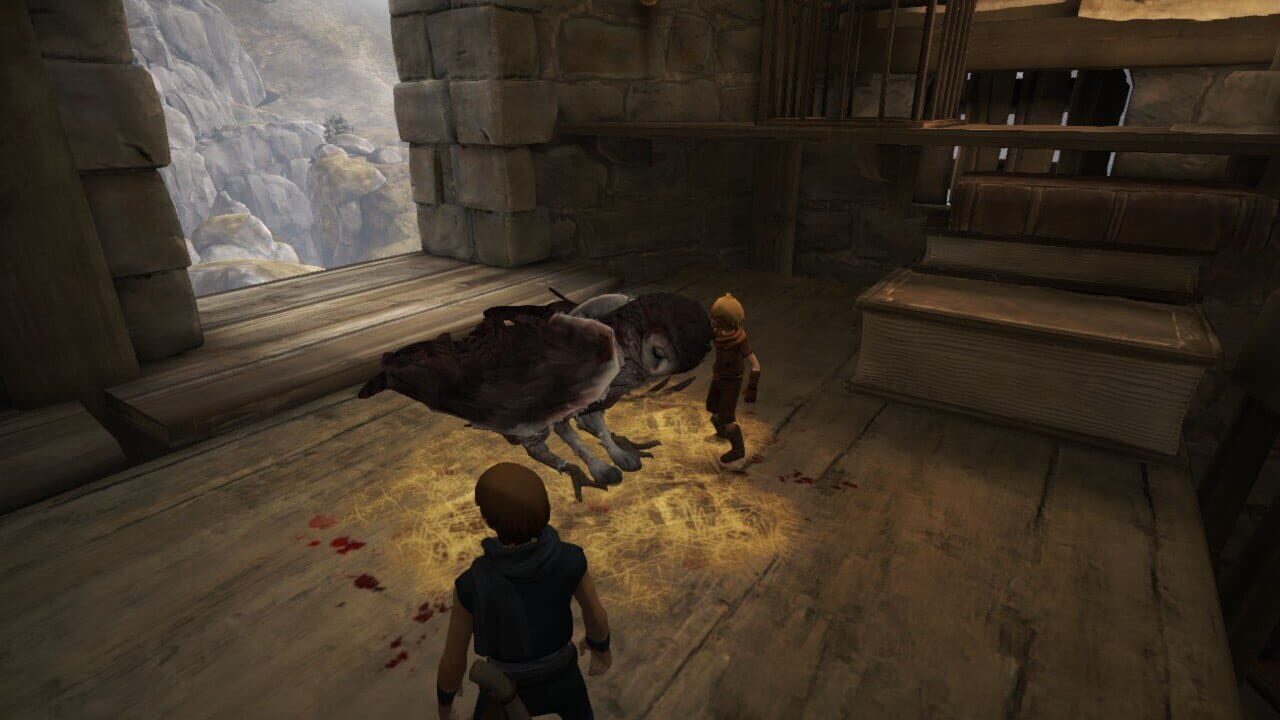
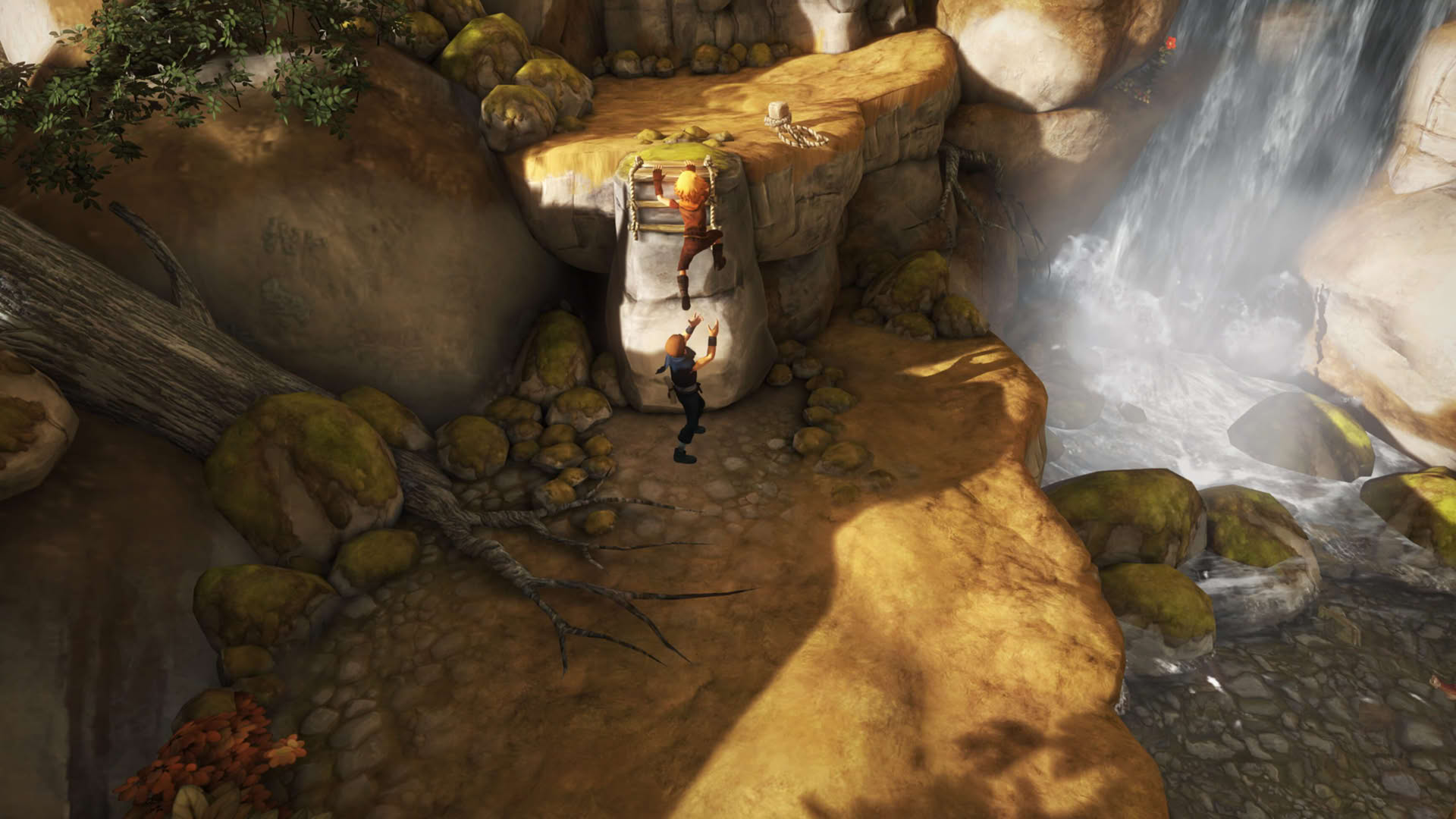
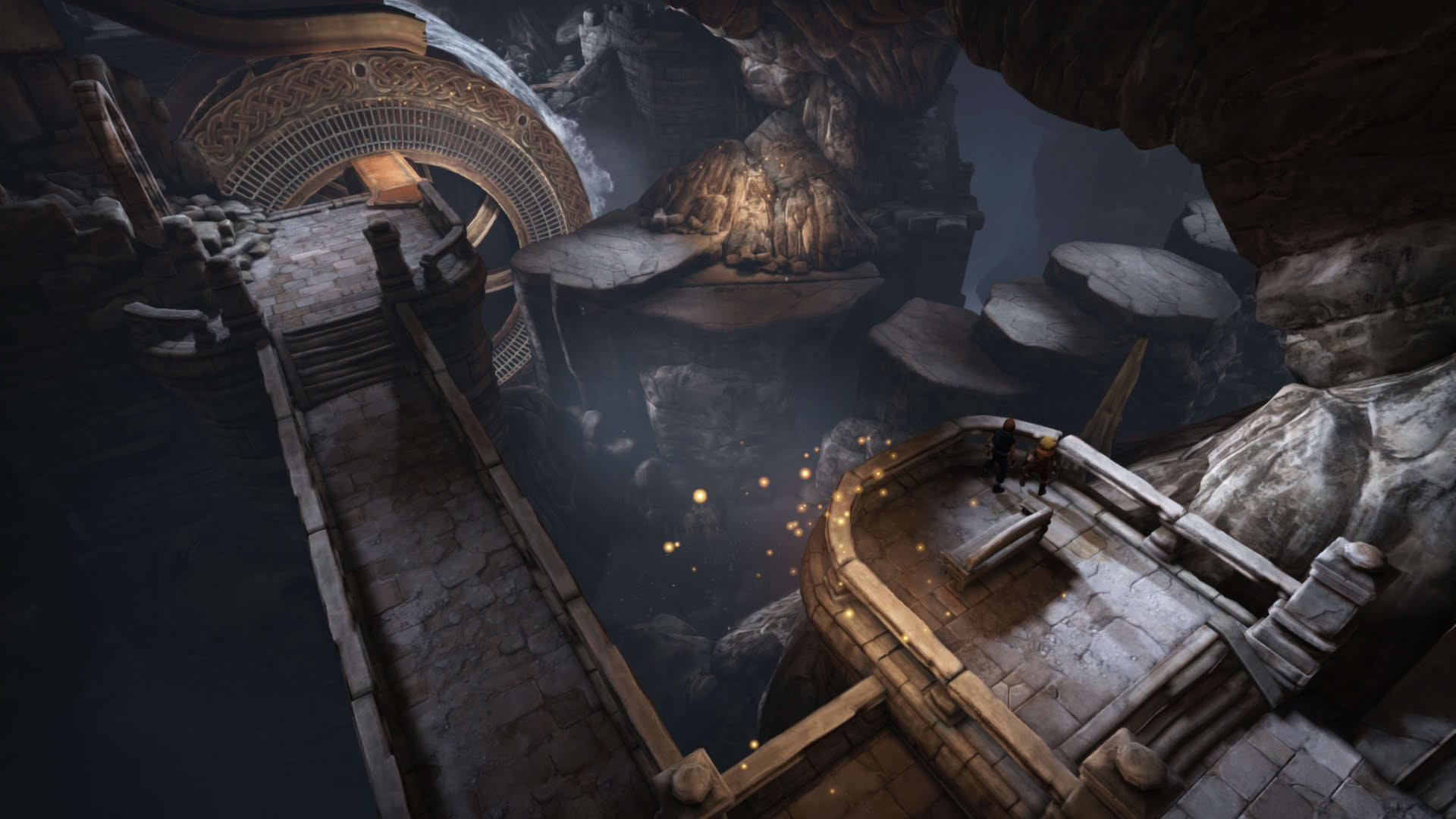
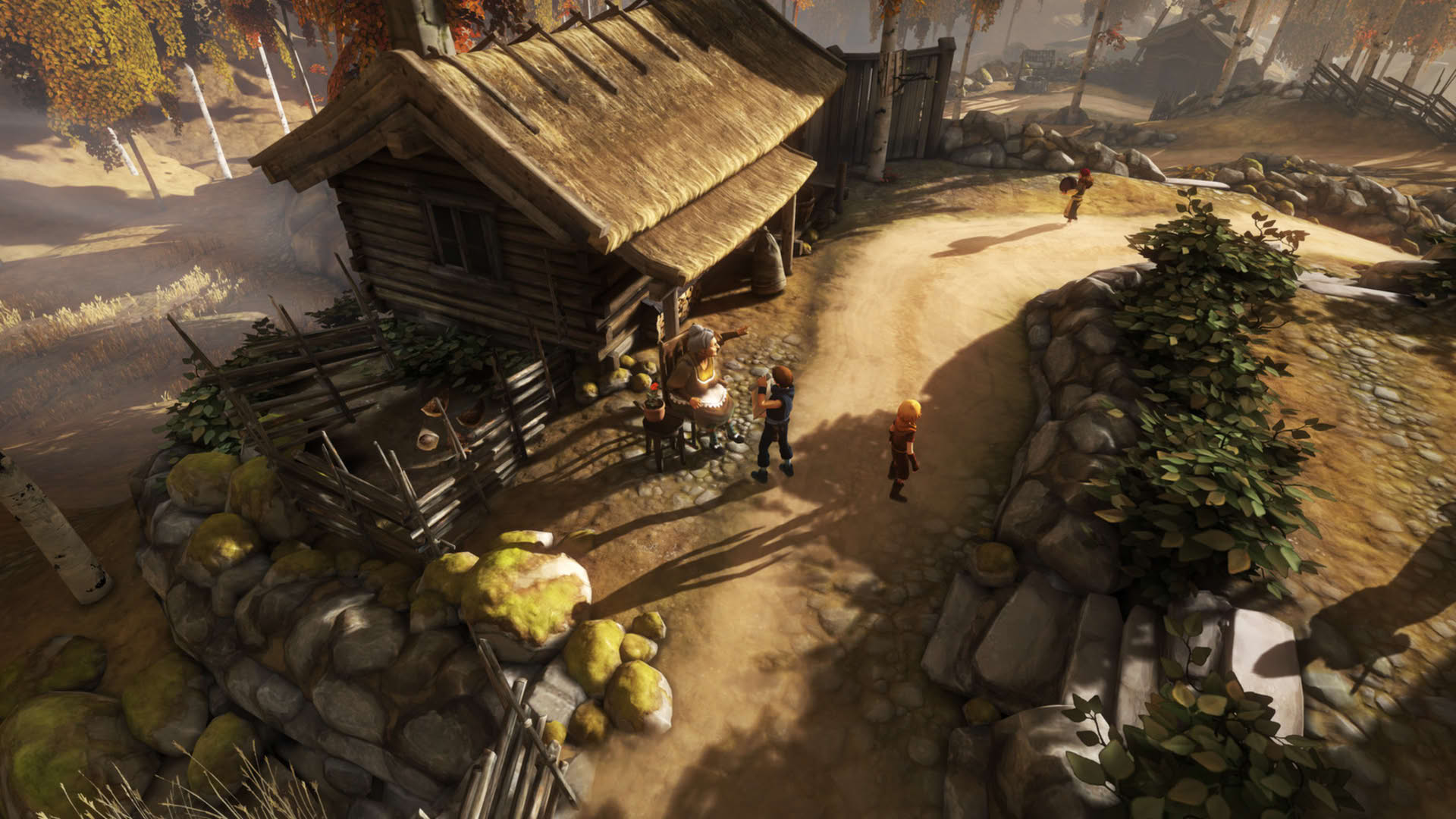
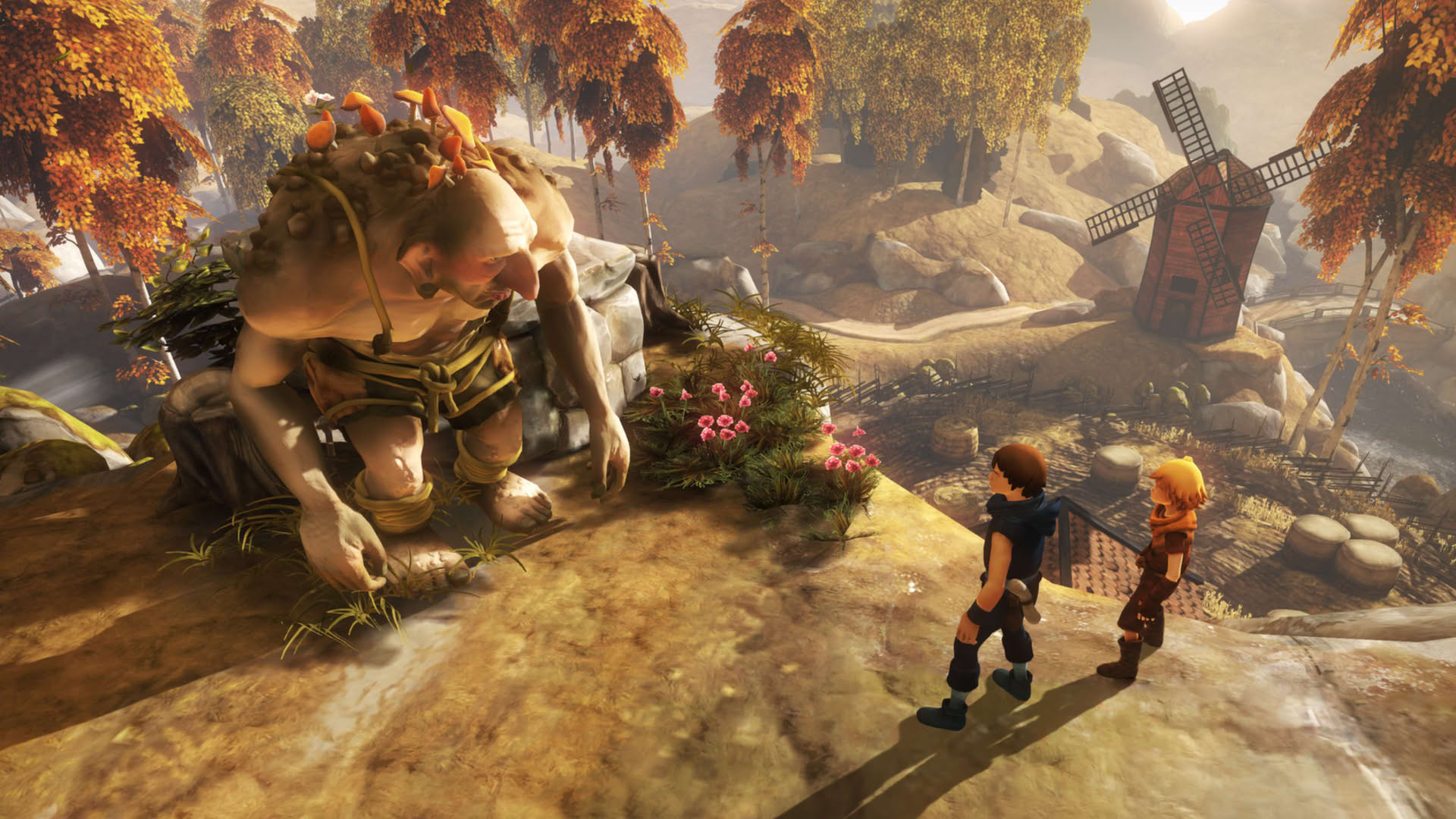
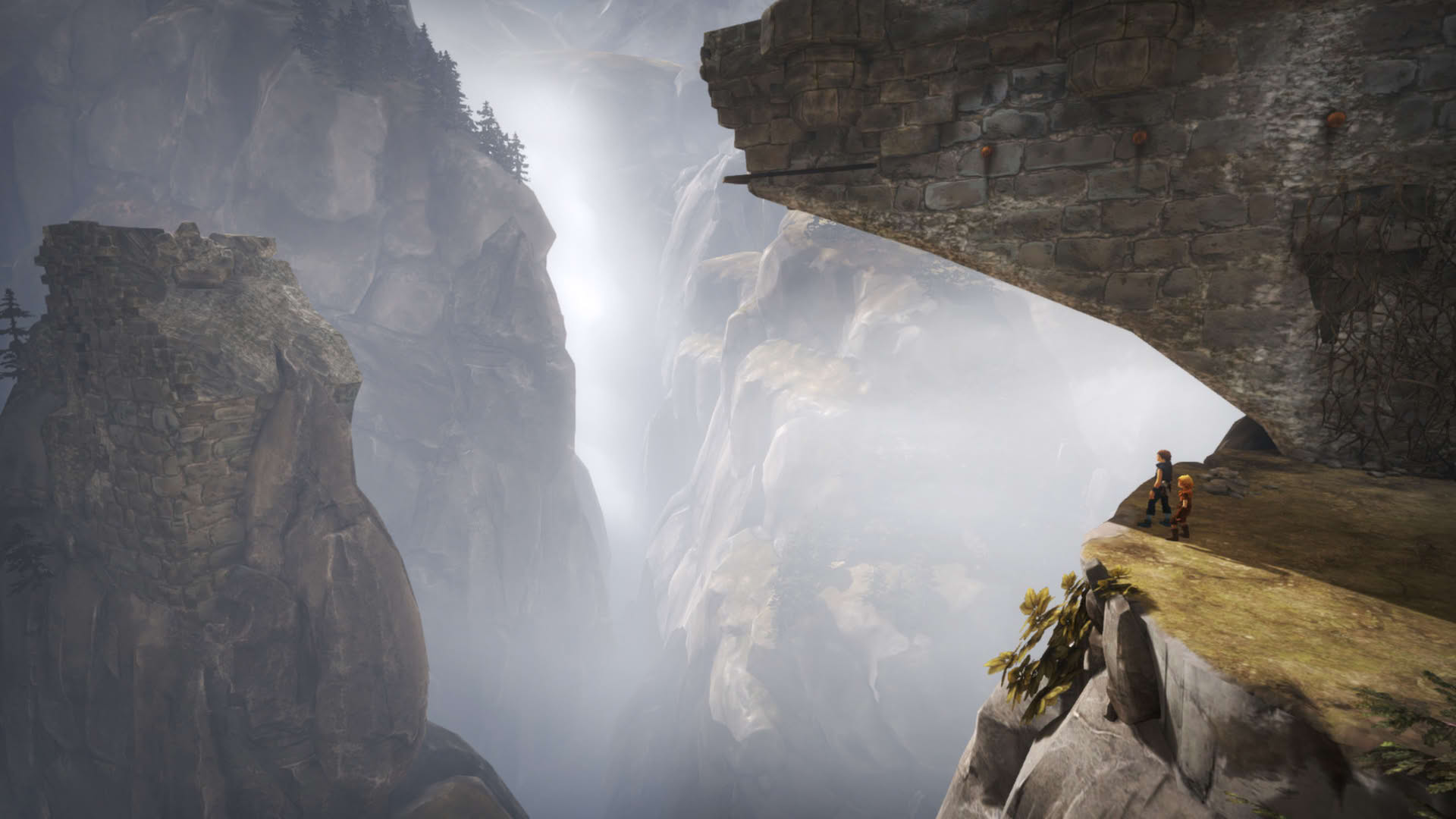
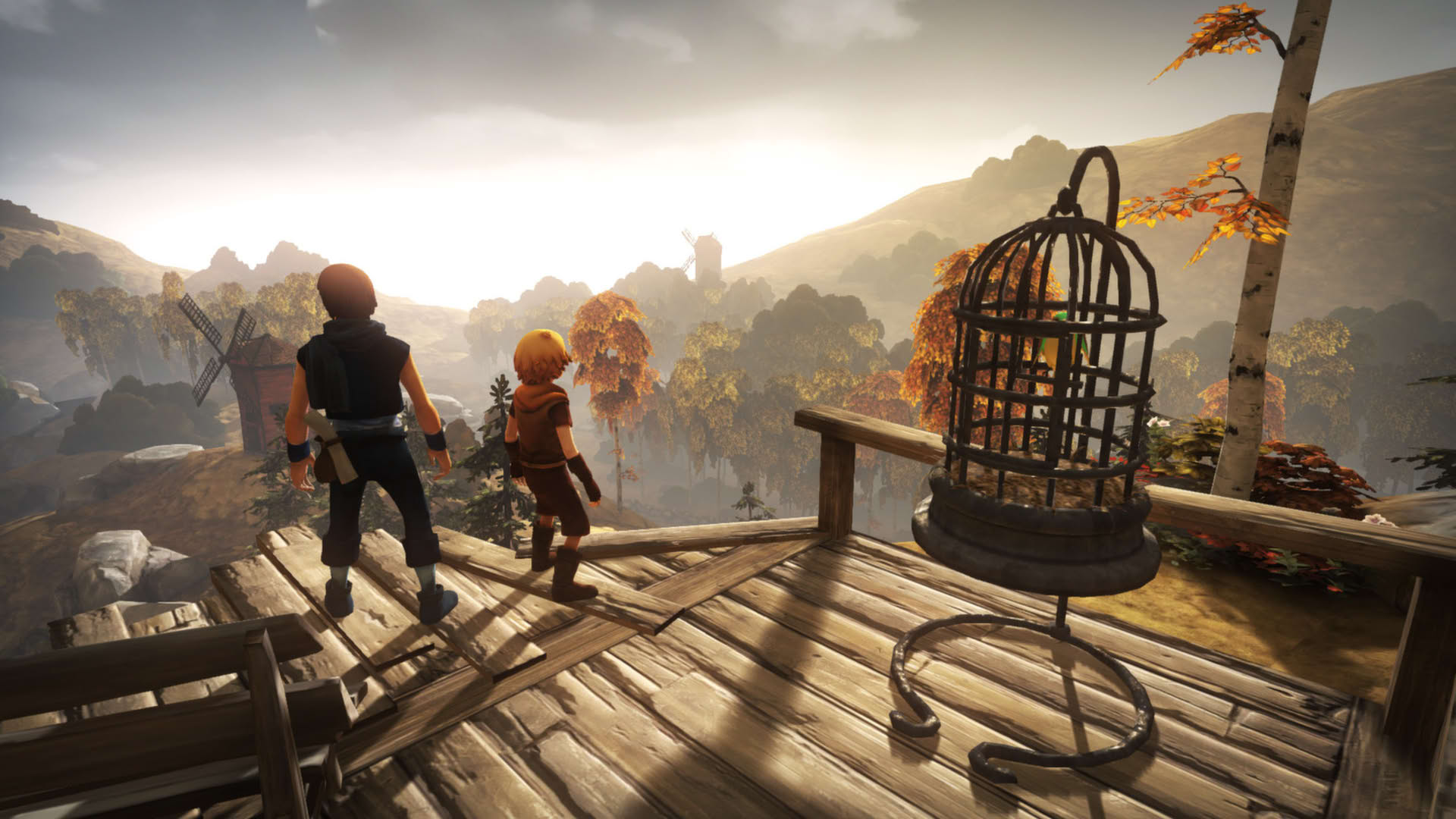
Brothers is presented from a third-person view overlooking the two brothers. The brothers are moved individually by two thumbsticks on the controller. The controller triggers also cause the respective brother to interact with the game world, such as talking to a non-player character or grabbing onto a ledge or object.
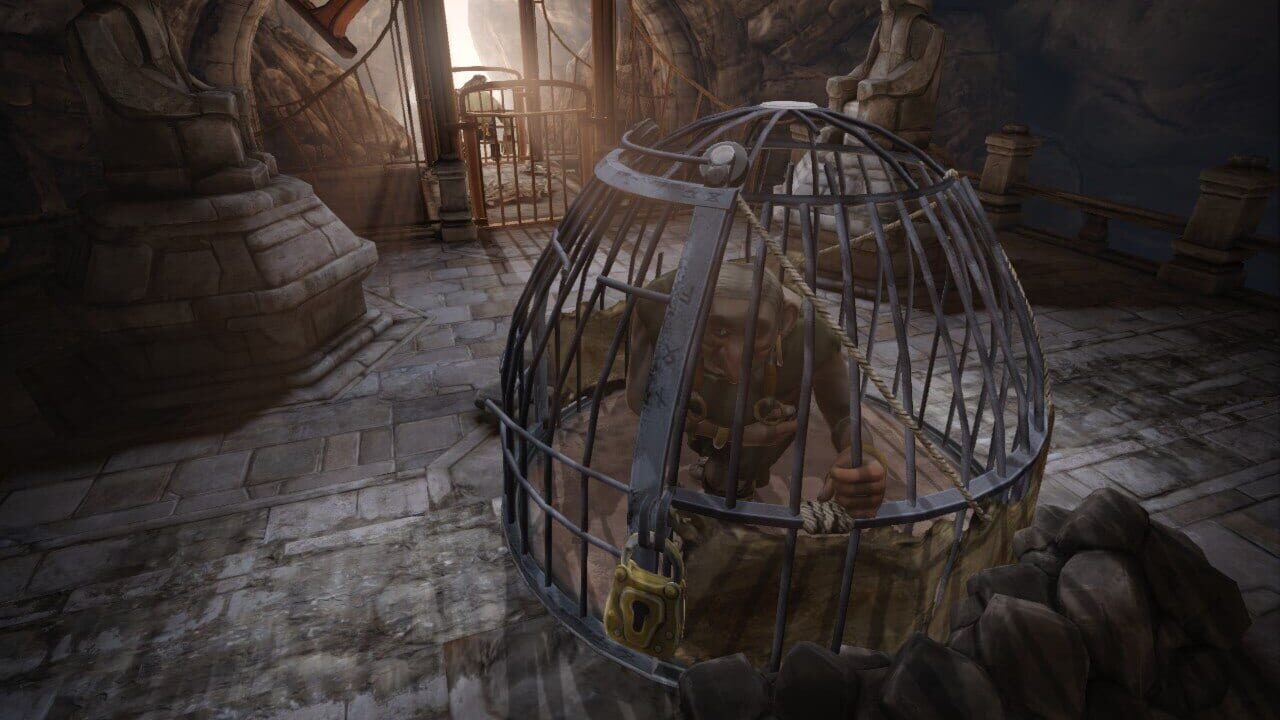
The older brother is the stronger of the two and can pull levers or boost his younger brother to higher spaces, while the younger one can pass between narrow bars. The player progresses by manipulating the two brothers at the same time to complete various puzzles, often requiring the player to manipulate both brothers to perform differing functions (such as one distracting a hostile non-player character while the other makes their way around).
Should either brother fall from a great height or get injured, the game restarts at a recent checkpoint. All of the in-game dialogue is spoken in a fictional language, thus the story is conveyed through actions, gestures and expre...
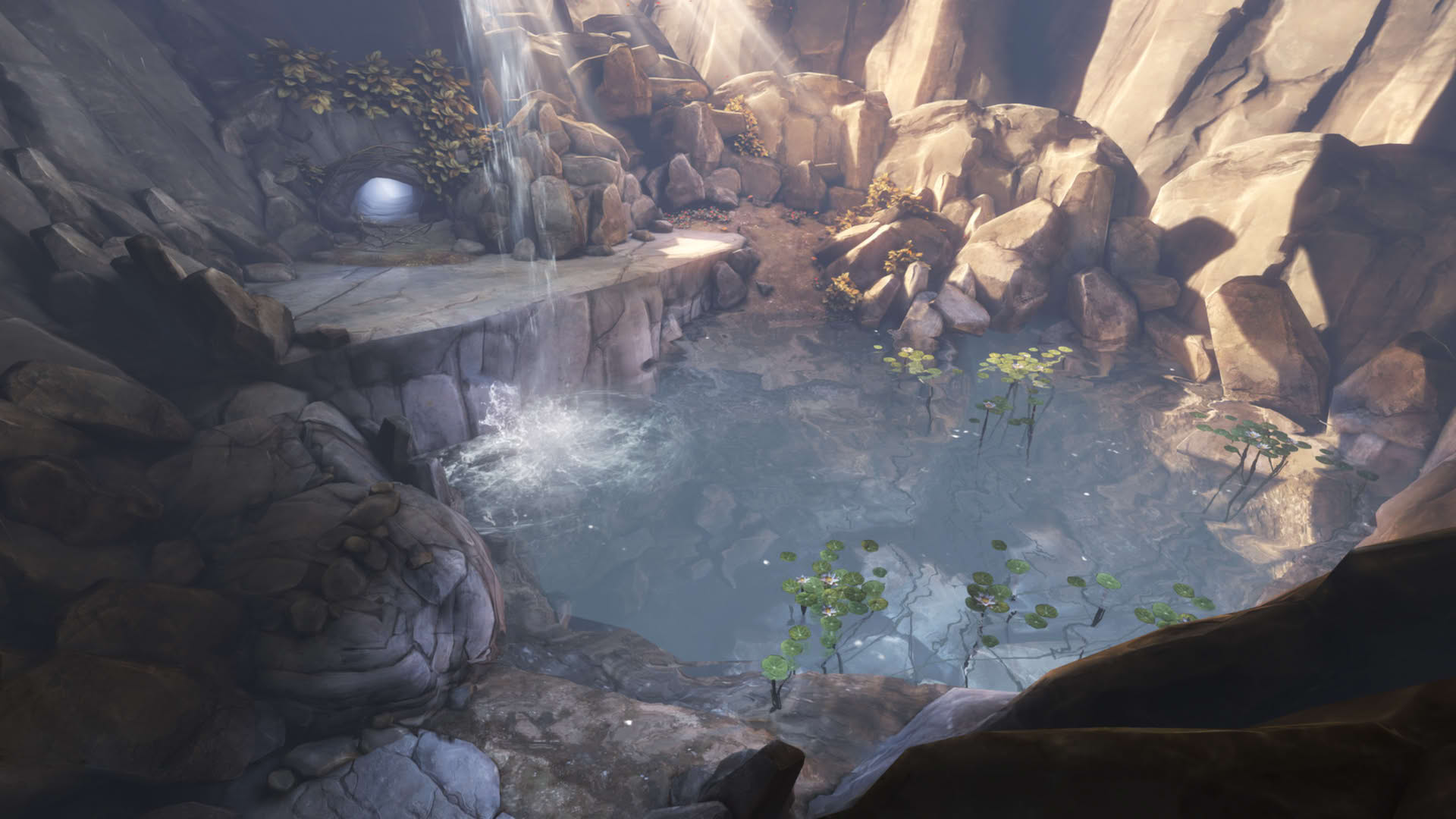
Starbreeze's collaboration with first-time game director Josef Fares is a soaring success, joining wholly unique and effective controls with a vivid visual language.
It's certainly not a game for those that love fast-paced action, but for anyone wanting to take the time to appreciate the world around them, Brothers: A Tale of Two Sons is a good choice.
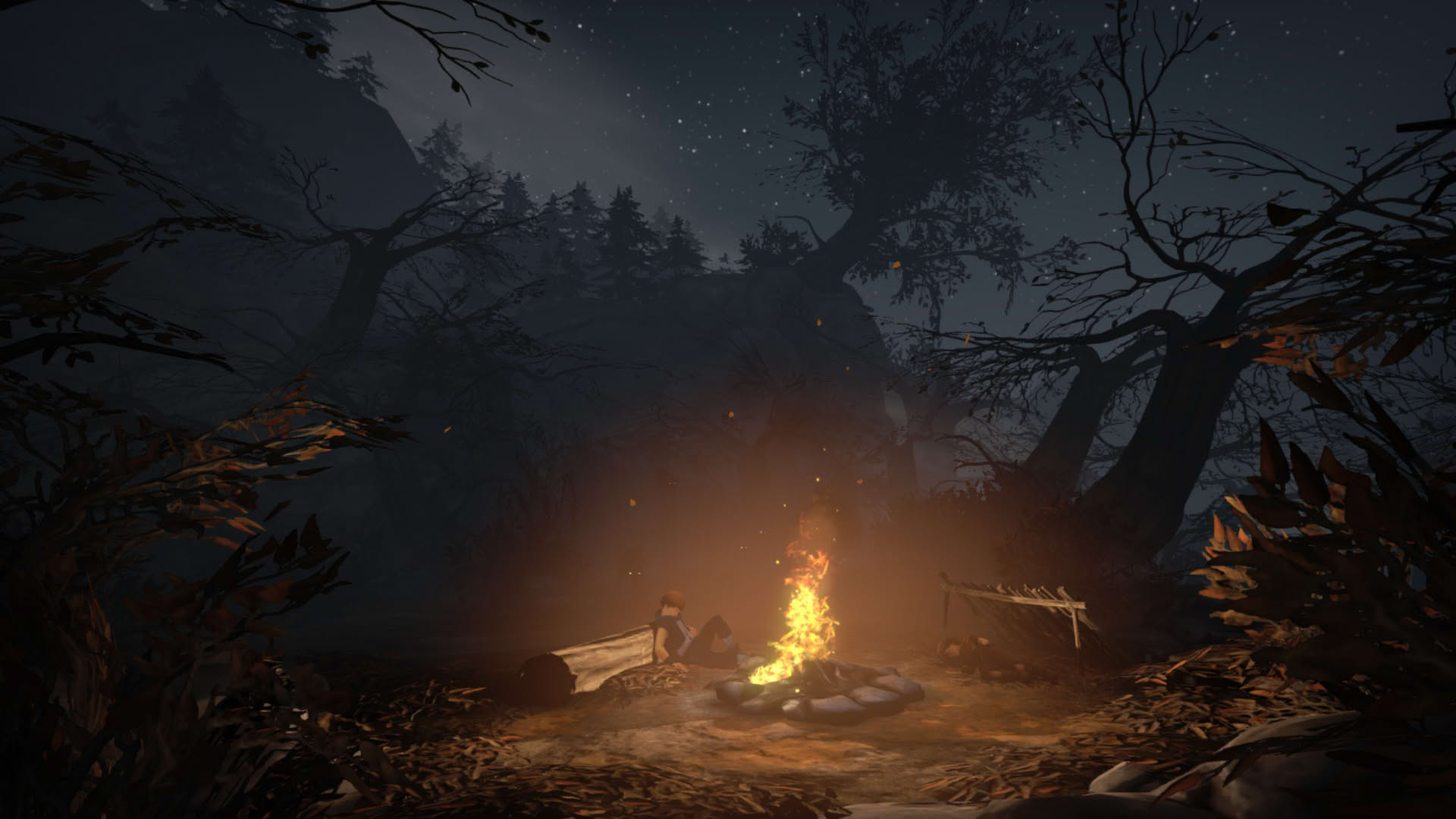
Its emotional experience is worthy of praise, as it is its heavy, gritty environment. The plot is rather short-lived, which makes the journey less involving than it could be, but overall the experience of Brothers: A Tale of Two Sons is worth exploring by all those who are interested in a more emotional component of gaming.
The opportunity to play Brothers A Tale of Two Sons in local co-op is not a bad idea in itself, but the experience is less relevant since it was designed as a solo game at first, with a single player able to control two characters at the same time.
Brothers: A Tale of Two Sons for the Switch should've been an exciting time, but this wasn't the case.